BRIEF
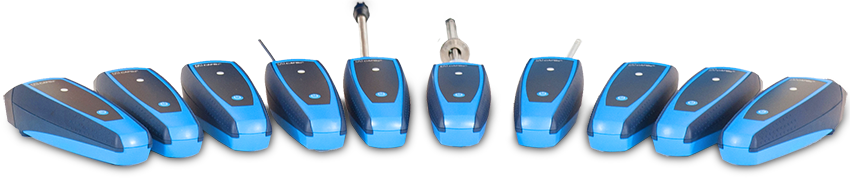
SYSTRONIK, a brand of the AFRISO Group, is a German manufacturer of measuring instruments. In 2014, we designed the award-winning Multilyzer STX. The company introduced a revolutionary concept: a modular product system consisting of a universal base handle, a transmitter, a display unit and various application-specific sensor modules for measuring a wide range of parameters, including pressure, temperature and humidity. The combination of a sensor module and the handle results in a compact, ready-to-use measuring device.
DESIGN PROCESS
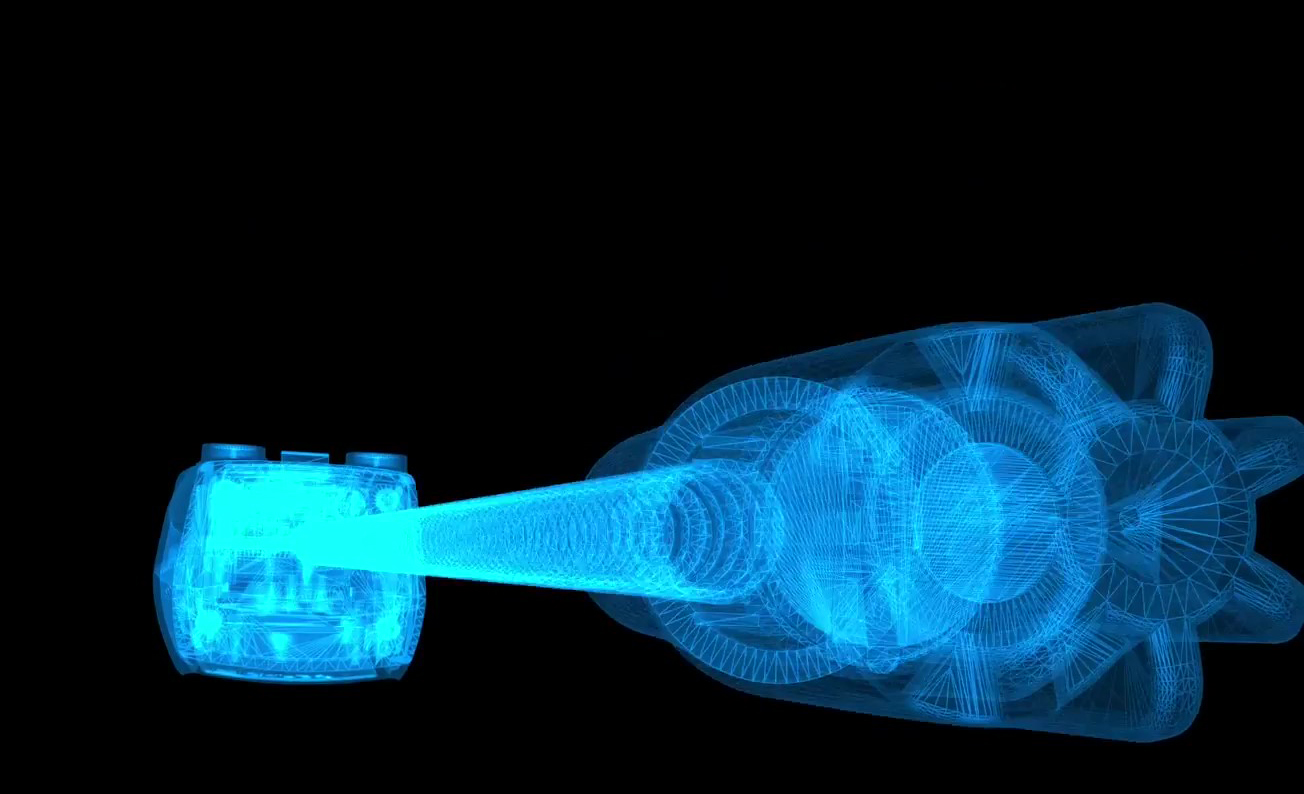
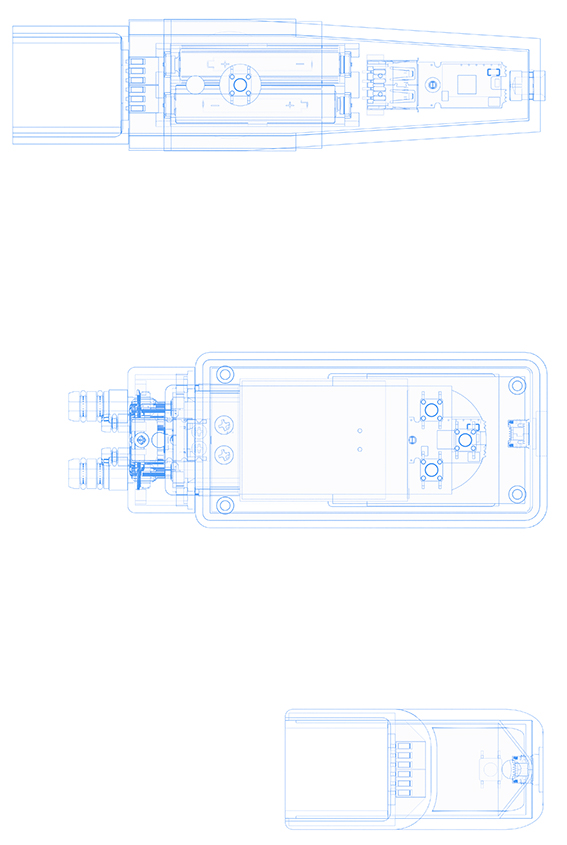
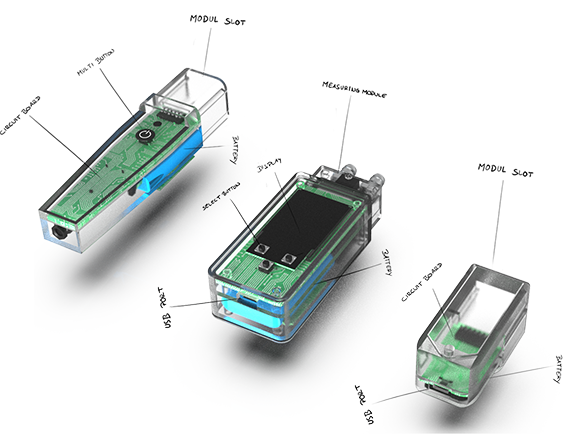
Systronik provided 3D volume models of the handle, the device, the transmitter, and all the different measure-units including the complete built-in technology.
Analysis
The technical requirements were complemented by ergonomic, functional and market-related investigations. Particular attention was given to the semantic qualities of the future product and the question of how precision, reliability and quality could be communicated through its formal language while maintaining coherence with the existing product family. Ergonomic studies focused on the visual and tactile cues that support intuitive handling and contribute to a clear understanding of the product’s functionality.
Ideation
The concept phase explored a variety of formal directions. Throughout the investigation, the established family design served as a constant reference, ensuring that new interpretations remained consistent with the brand’s visual language while allowing the product to develop its own distinct character. Particular attention was given to how formal expression could communicate quality, reliability and technical competence across the wider product portfolio.
Variation
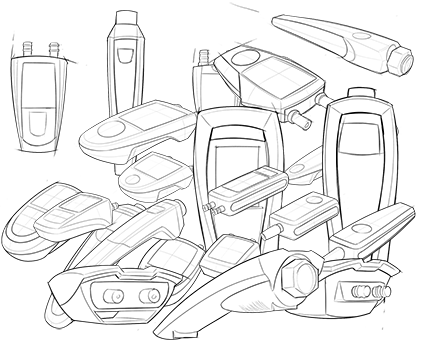
The concept phase explored a variety of formal directions. Throughout the investigation, the established family design served as a constant reference, ensuring that new interpretations remained consistent with the brand’s visual language while allowing the product to develop its own distinct character. This investigation considered how form, proportion and interface elements could support intuitive handling while communicating quality, reliability and technical competence through a coherent product language.
Elaboration
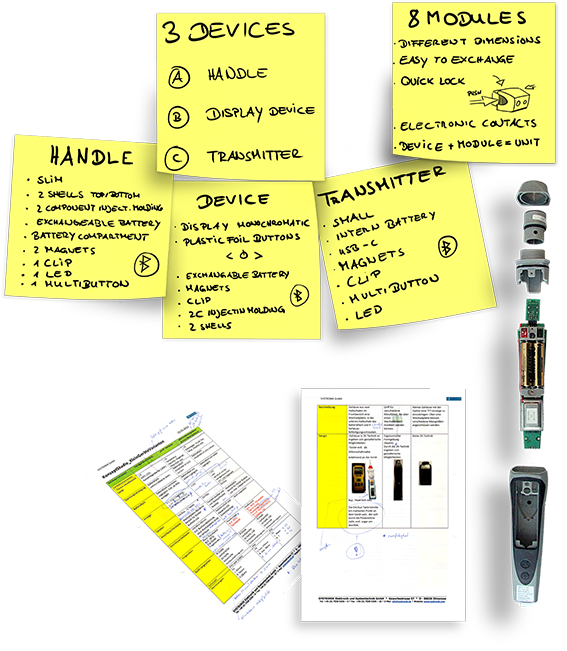
The selected concept was further developed around the integration of the shared measurement modules across three devices. Establishing a common interface architecture required careful coordination of proportions, ergonomic requirements and functional layouts, ensuring technical compatibility and visual coherence across the product family.
Technical Issues
The design development was guided by several key technical requirements, including a two-component injection-moulded housing consisting of an upper and lower shell, membrane key controls and an opening mechanism that allowed the measurement units to be exchanged quickly and efficiently.
&
Product Language
Form, color and material were used to establish a coherent product language that supports intuitive use, reinforces family resemblance and communicates technological advancement, professional competence and the high standards associated with contemporary measurement technology.
Realisation
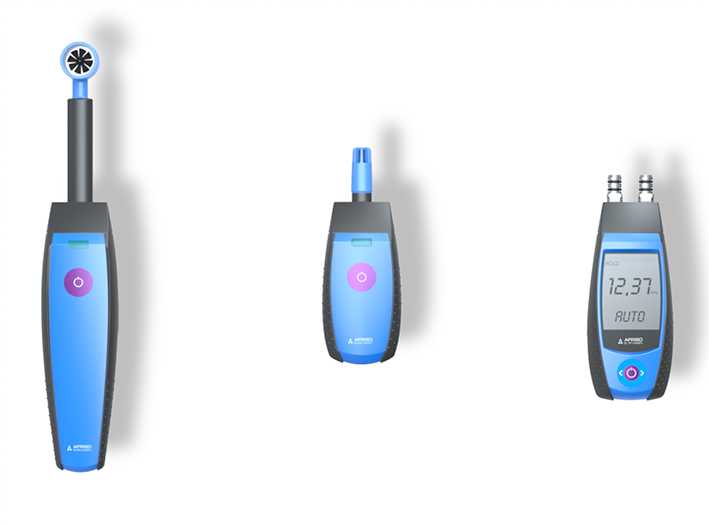
The final development phase focused on refining the formal relationships between surfaces, radii and transitions. The resulting coherence strengthens the perception of precision, quality and reliability, contributing to a product language that reflects the professional standards and technological sophistication of the device.
Additonal Features
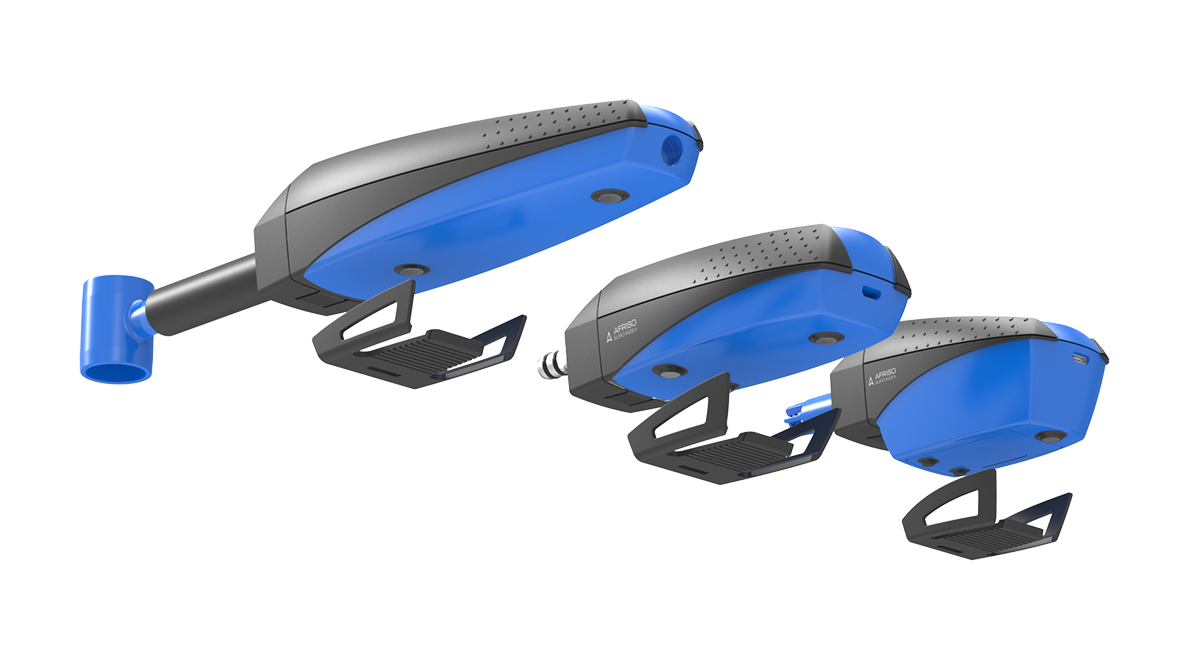
The mounting concept was developed to support a wide range of application scenarios and working contexts. By integrating both magnetic attachment and clip-based carrying options, the product offers flexible positioning and immediate accessibility while reinforcing its character as a practical and professional measuring tool.
FINAL PRODUCT
The rubber remained dark blue and a black foil has been added.
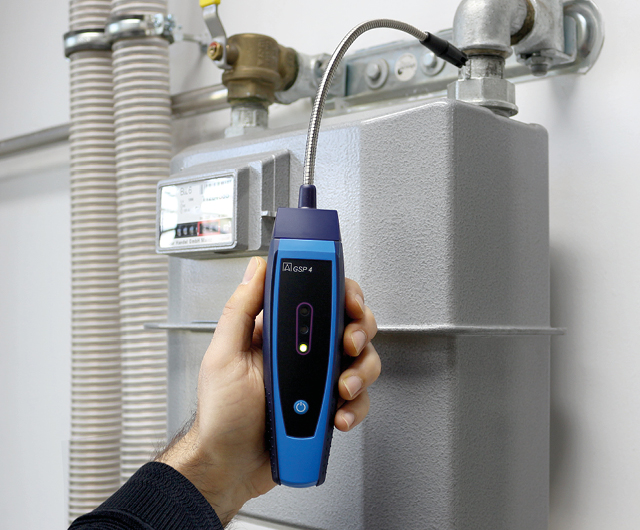
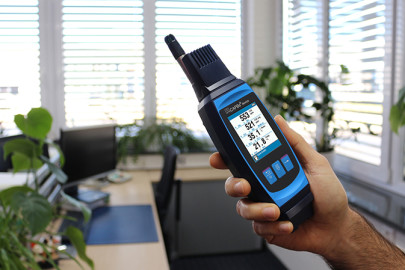
Easy to read, the label has been placed on top of the devices and finally the buttons have been changed.