
DORO LUCENT
BRIEF
With the Doro Lucent, the BLACK FOREST MEDICAL GROUP (BFMG) set a highly ambitious goal: to develop a skull clamp that is robust, penetrable by radiation, lightweight, and most importantly – can be operated by only one person.
The early integration of design created the opportunity to address usability, ergonomics and product architecture as interconnected aspects of the development process. Through the continuous dialogue between design and engineering, the product evolved as a coherent system in which technical requirements, user needs and interaction qualities informed one another from the outset.
DESIGN PROCESS
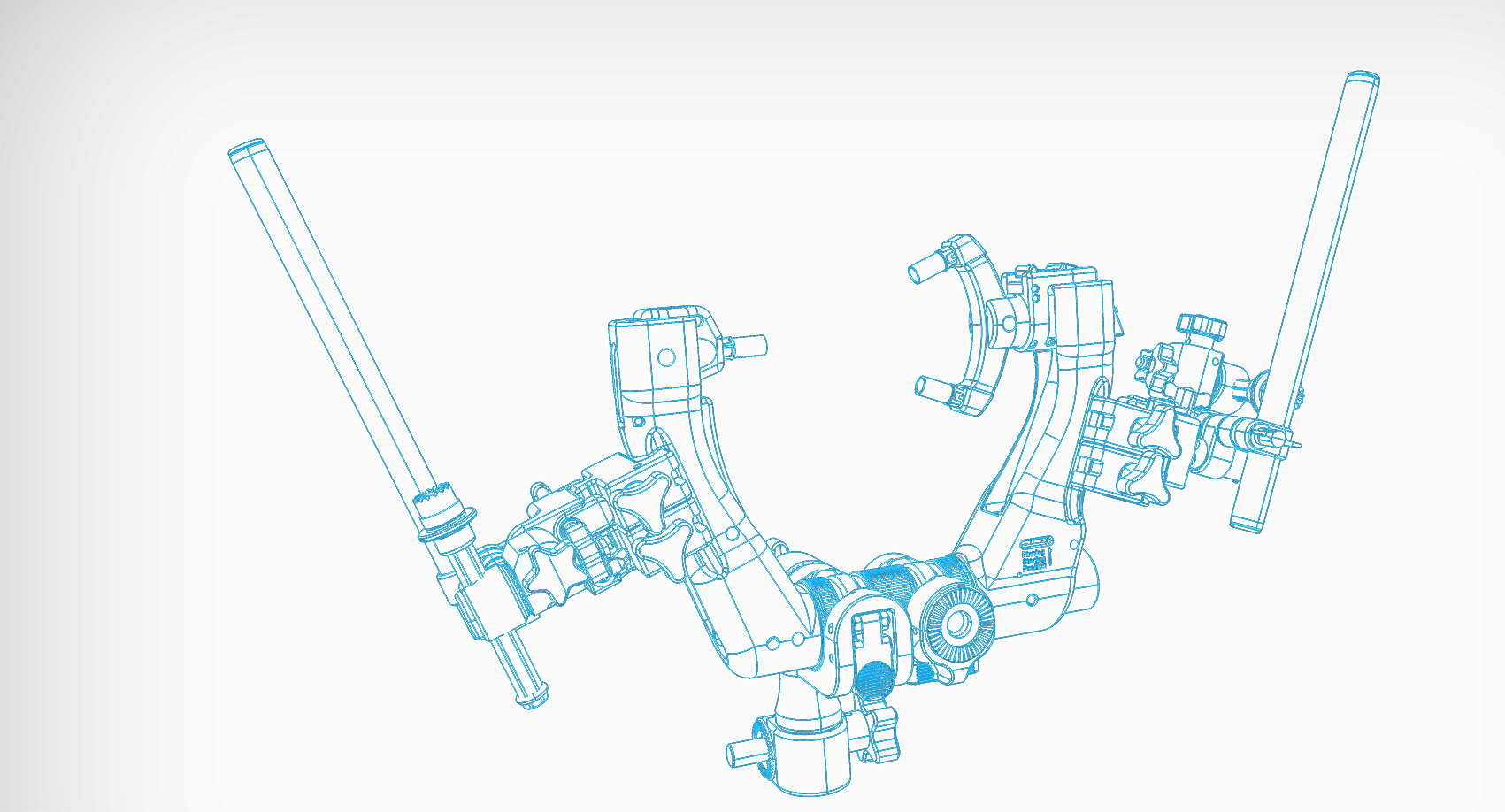
The development of the skull clamp was characterised by a high degree of technical complexity and a continuous process of refinement. Over the course of several years, functional requirements, engineering solutions and user-related considerations were repeatedly evaluated, adjusted and further developed. This iterative approach allowed the product architecture to evolve in response to emerging insights and changing demands.
The project demonstrated the value of maintaining openness throughout the development process and of treating technical, ergonomic and operational requirements as interconnected aspects of a coherent whole. With an extraordinary will for perfection and an unusual openness to creative ideas, the clamp was ultimately implemented as the company had desired – a skull clamp that is now indispensable in operating rooms around the world.
Analysis
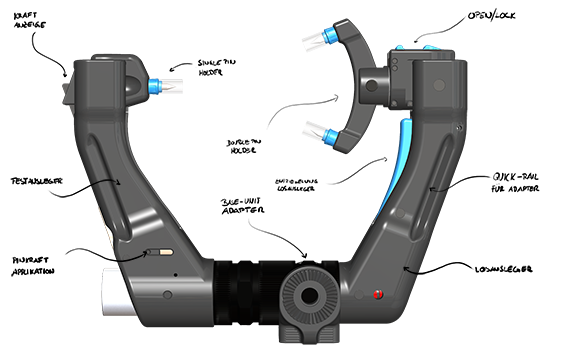
Previously, operations required 2-3 people to apply the device to an anesthatized patient’s head. With a new, sophisticated mechanism, it should be possible for a single operator to apply the clamp on their own. For the operation itself, the clamp must accommodate a wide variety of equipment. To be able to monitor the progress of the operation, the patient must be inserted into a CT scan without removing the clamp. For this reason, the clamp must not only be penetrable by radiation, but also, due to its composition, produce minimal artifacts in the X-ray image. The clamp achieves this through its uniform material thicknesses and few edges as possible.
Ideation
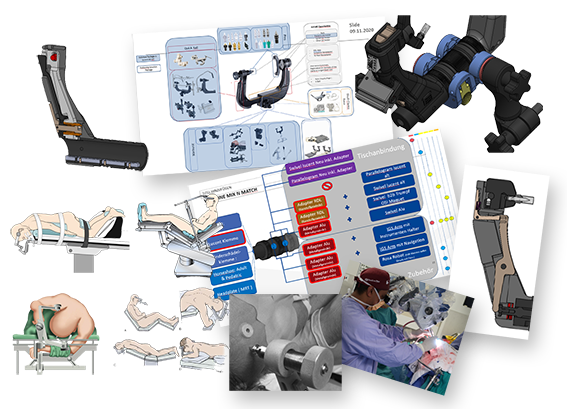
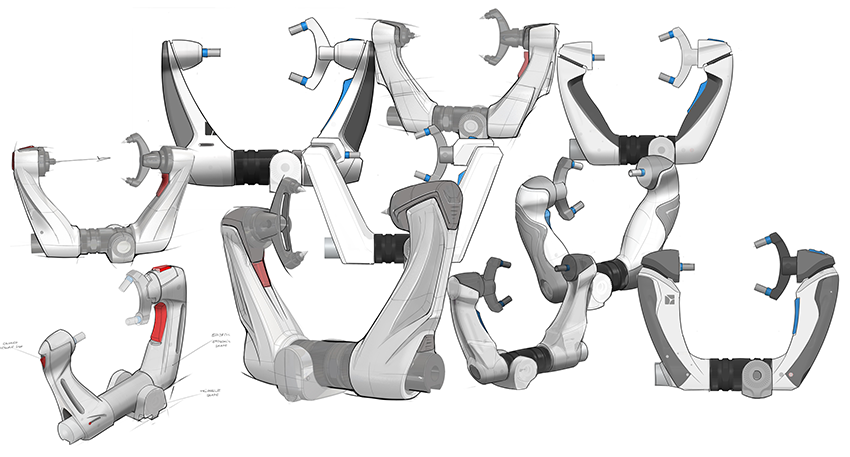
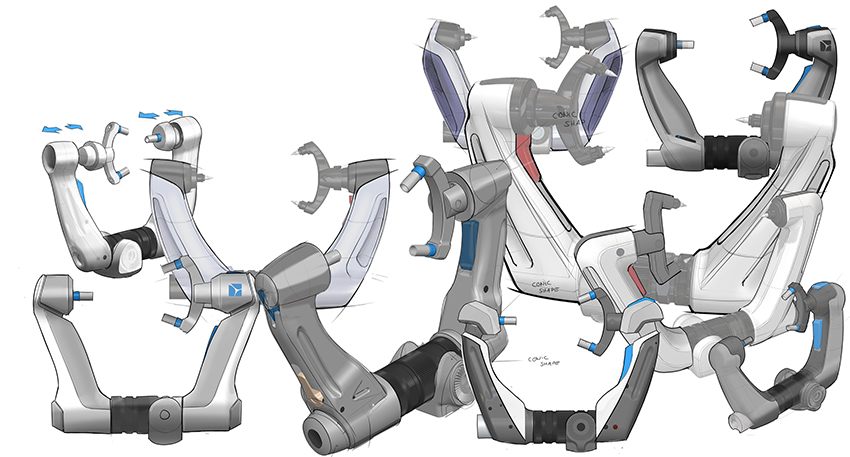
The initial exploration was characterised by an open and deliberately unconstrained design inquiry. A broad spectrum of formal concepts was developed to investigate how different design languages, product architectures and interaction principles could shape the identity and perception of the future product.
Variation
The concept phase explored the relationship between functional requirements, clinical context and product meaning. It also created an opportunity to discuss and evaluate different semantic possibilities, establishing a shared understanding of the qualities the product should communicate within the surgical environment. Particular attention was given to how technical competence, reliability and confidence could be expressed through form, thereby supporting both orientation and trust during use
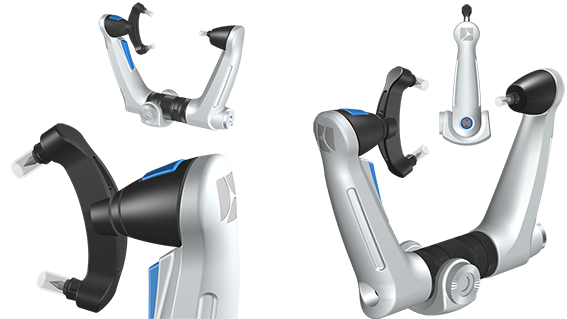
The preferred concept emerged through its ability to communicate the essential qualities of the product. Its reduced form language, clear visual hierarchy and carefully controlled proportions conveyed precision, reliability and professional confidence, creating a strong and shared understanding of the product’s intended identity.
Elaboration
Following the establishment of a clear design direction, the development centred on resolving complex technical requirements and functional relationships. New engineering insights continuously informed the product architecture, leading to successive refinements and, where necessary, the reconsideration of individual design solutions. This iterative process contributed significantly to the coherence and maturity of the final product.
Realization
Technical Issues
A key objective of the development was to enable the safe and efficient operation of the clamp by a single user. This required the creation of a sophisticated mechanical architecture in which functional performance, adjustment mechanisms and ergonomic handling were closely interrelated. At the same time, all components had to satisfy the demanding requirements for radiolucency, sterilisation and long-term reliability within the surgical environment. The project therefore demanded the continuous integration of technical, operational and ergonomic considerations into a highly coherent engineering solution.
&
Product Language
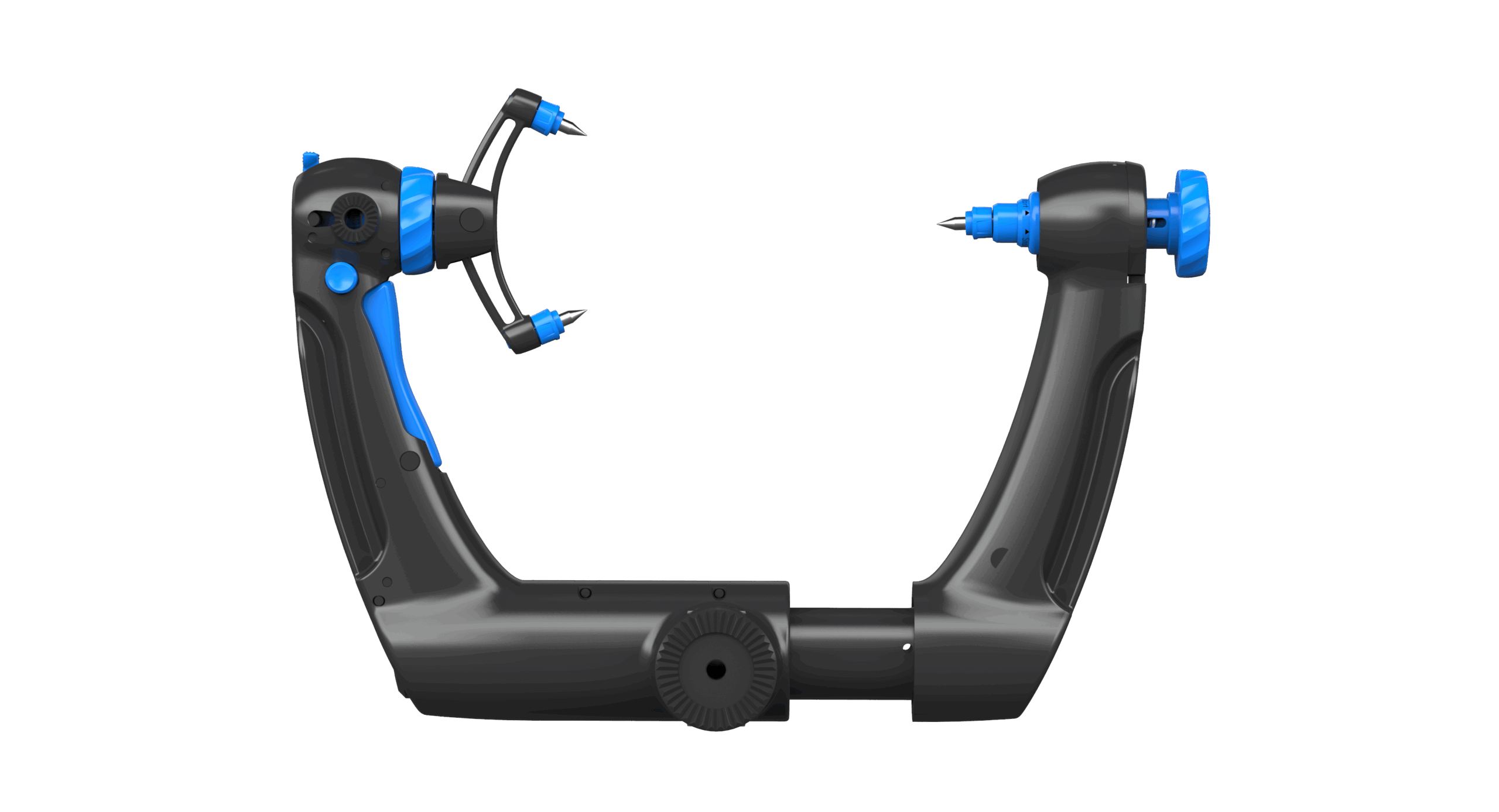
The design was developed around the question of how essential qualities such as precision, safety and reliability could be communicated through form. A clear functional hierarchy, intuitive interaction principles and a highly coherent geometry establish orientation and support confident use within the clinical environment. The resulting form language conveys technical competence and quality while creating a calm and trustworthy presence in an otherwise highly demanding context.
Renderings & CAD
FINAL PRODUCT
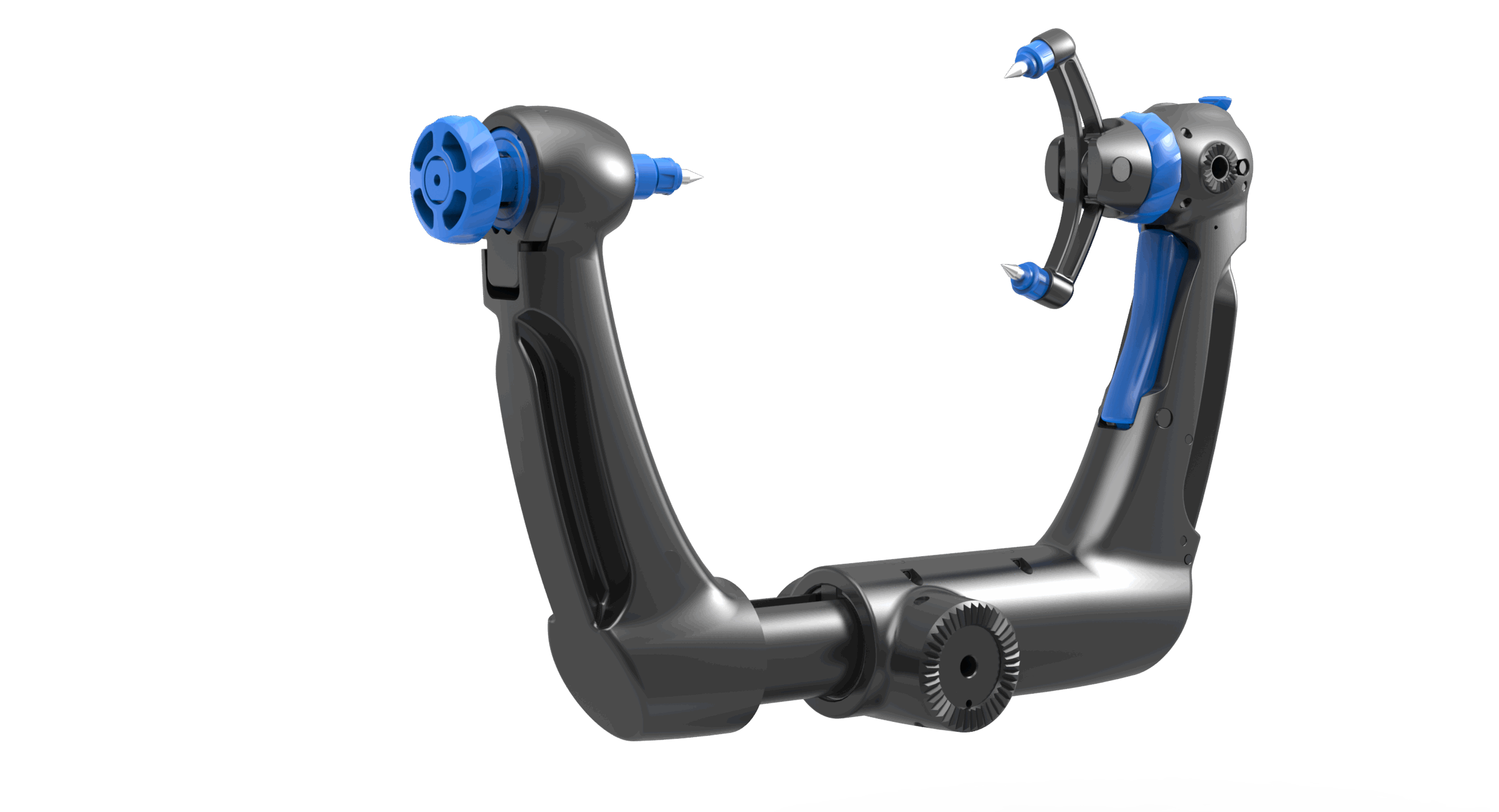
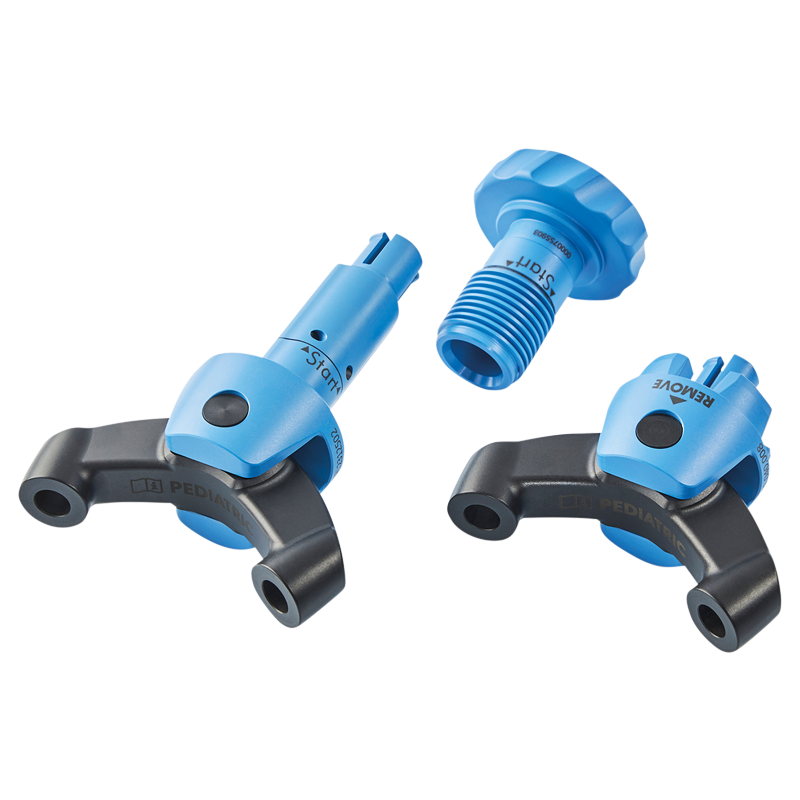
The color concept formed an essential part of the product’s communicative qualities. By transferring the corporate brand color to key interaction and functional elements, the design established a stronger connection between brand identity, user orientation and product architecture. The resulting visual coherence enhanced perceived quality and recognizability, demonstrating how color can act as a strategic design element Despite the additional manufacturing costs, the decision supported a more distinctive, contemporary and semantically coherent product identity.
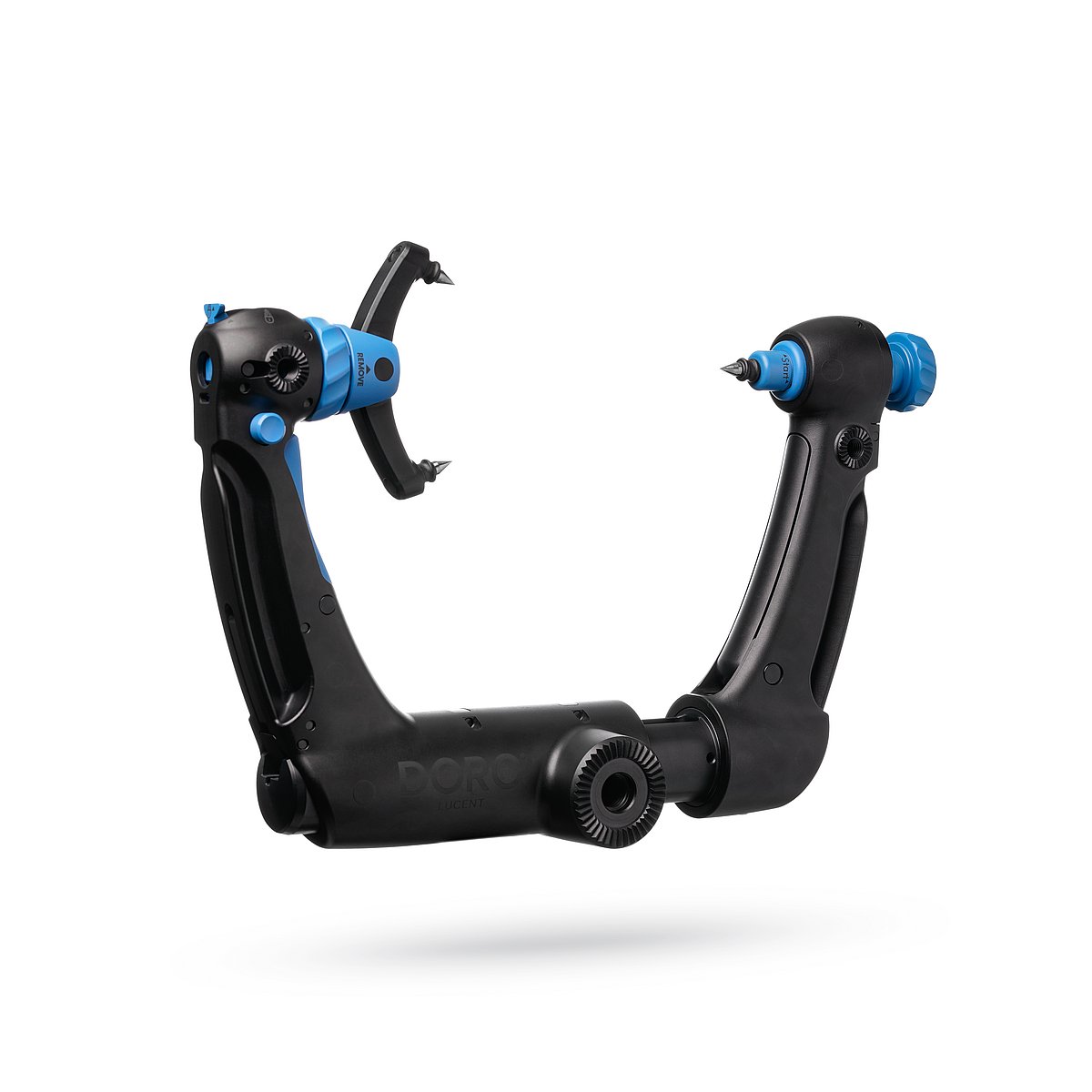
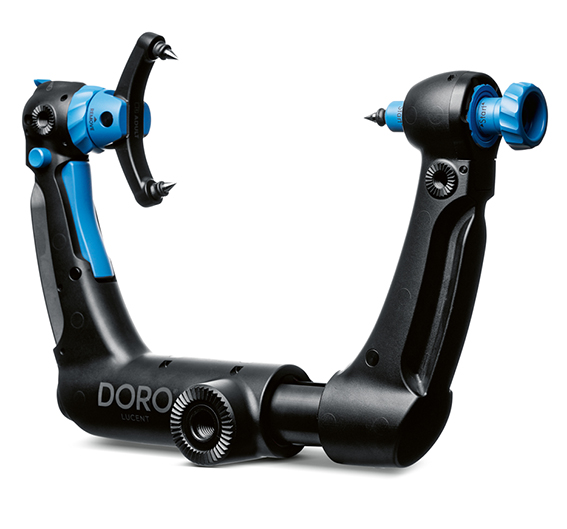
The logo and product lettering were integrated through an etching process to become an intrinsic part of the product architecture. Embedded directly into the material, these elements reinforce the perception of precision, permanence and reliability while establishing a coherent relationship between product identity and brand identity. Their subtle presence contributes to a product language that communicates technical competence, trust and lasting quality.
Phone
(+49) 160-5189458